
TL;DR
The first device marketed as a smartphone was the Ericsson R380 in 2000. Many famous phones of the decade, like the Nokia 3310 and Motorola RAZR, were actually feature phones. True smartphones, like the BlackBerry, Sidekick, iPhone, and HTC Dream, brought email, web browsing, and apps. The iPhone in 2007 and Android in 2008 changed everything.
Your first phone probably did little more than call and text. Yet an early smartphone model of the 2000s could already check email and browse the web. A smartphone is a phone that also works like a small computer. The first device sold as a smartphone was the Ericsson R380 in 2000. Then came the BlackBerry, the Sidekick, the iPhone, and the first Android phone. This guide covers eight iconic phones and shows which ones were true smartphones.
What Counts as an Early Smartphone Model of the 2000s?
A smartphone is a phone that also works like a small computer. It handles email, browses the web, and runs extra software. A basic phone, often called a feature phone, mainly makes calls, sends texts, and plays simple games. Some feature phones ran small Java games. Still, they lacked a full operating system open to outside developers.
An operating system is the main software that runs a phone. True early smartphones used systems like Symbian, Palm OS, BlackBerry OS, and Windows Mobile. Later, Apple’s iOS and Google’s Android joined the list.
This difference matters for the 2000s. Many famous phones from that decade were feature phones. They were iconic, but they weren’t smartphones. Use three quick questions to tell them apart:
- Does it have real email and a full web browser?
- Does it run a full operating system built for add-on software?
- Can you install new apps or programs?
What Was the First Smartphone of the 2000s?
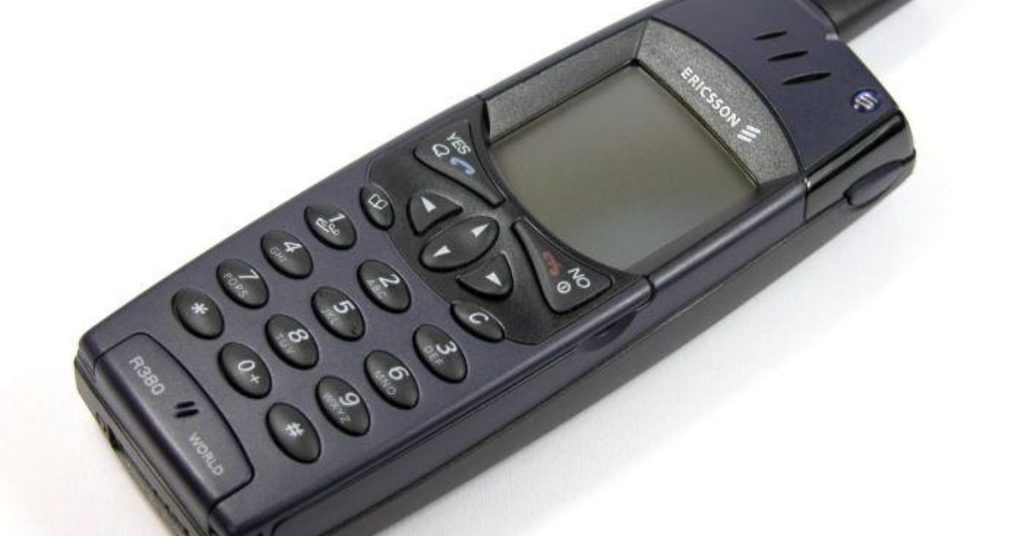
The Ericsson R380 was the first device marketed as a “smartphone.” It reached stores in November 2000. Its had a black-and-white touchscreen under a flip cover. It also ran EPOC, the software that became the base of Symbian.
However, the R380 had a limit. Users couldn’t install their own software. So it earned the smartphone name more by design than by freedom. Earlier devices, like the IBM Simon and the Nokia 9000 Communicator, came before the 2000s.
Which other smartphones came before the iPhone?
Several models showed where phones were heading:
- Nokia 7650 (announced 2001): Nokia’s first phone with a built-in camera. It also added Bluetooth, GPRS, and a color screen.
- BlackBerry 5810 (2002): The first BlackBerry with phone calling. It needed a headset for calls, but its email was the star.
- Palm Treo 600 (2003): A popular mix of organizer and phone that helped make smartphones mainstream.
Danger’s Hiptop, launched in 2002, also belongs on this list. It gets its own section below.
Which Iconic Early 2000s Phones Defined the Decade?
Here’s a quick view of eight icons. Notice that only four were true smartphones.
| Phone | Year | Type | Why it mattered |
| Nokia 3310 | 2000 | Feature phone | Tough, long battery life, about 126 million sold |
| Danger Hiptop / T-Mobile Sidekick | 2002 | Smartphone | Swivel keyboard, instant messaging, always-on data |
| Motorola RAZR V3 | 2004 | Feature phone | Thin flip design, about 130 million sold |
| Sony Ericsson W800i | 2005 | Feature phone | Walkman music phone |
| LG Chocolate | 2006 | Feature phone | Stylish slider with touch-sensitive controls |
| BlackBerry Pearl | 2006 | Smartphone | Slim, camera-equipped BlackBerry for everyday users |
| Apple iPhone | 2007 | Smartphone | Multi-touch screen and a full web browser |
| HTC Dream / T-Mobile G1 | 2008 | Smartphone | First Android phone |
Sales figures come from commonly cited estimates, and sources vary.
Nokia 3310 (2000)
The Nokia 3310 became a legend for toughness. It was a feature phone with a simple screen, a long battery life, and the Snake game. Estimates put sales near 126 million units. It couldn’t install new software. Even so, people loved its reliability, which is why the name still carries weight.
Danger Hiptop / T-Mobile Sidekick (2002)
The Hiptop reached stores on October 1, 2002, as the T-Mobile Sidekick. It cost about $200, plus roughly $40 a month for data. Its screen swiveled to reveal a full keyboard. It also offered instant messaging, email, and web browsing.
Young users loved it, while Palm and BlackBerry won more business buyers. Andy Rubin, a Hiptop co-creator, later led Android. Danger’s data services shut down in 2011.
Motorola RAZR V3 (2004)
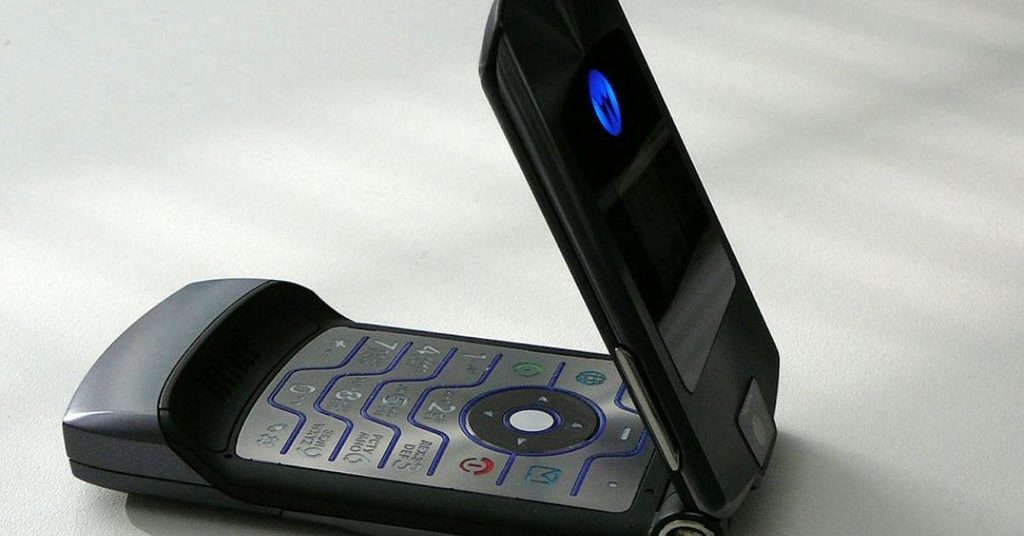
The RAZR V3 made thin phones fashionable. Its slim metal flip body stood out among plastic bricks. Motorola sold an estimated 130 million units. As a feature phone, it prioritized style over software. Yet it showed that design could sell a phone as much as features could.
Sony Ericsson W800i (2005)
The W800i was a Walkman-branded music phone. It had dedicated music keys and a 2-megapixel camera, which was strong for 2005. It showed that people wanted music and photos in one device. That idea led straight to the smartphones that followed.
LG Chocolate (2006)
The LG Chocolate was a glossy slider with touch-sensitive controls. It leaned on looks and music features, not apps. LG sold more than 20 million units, according to commonly cited figures. As a result, it proved that style could drive sales outside the smartphone world.
BlackBerry Pearl (2006)
The Pearl made BlackBerry feel personal. Earlier models looked like business tools. The Pearl was slim, and it added a camera and media player. It used a keyboard with two letters per key. That design helped BlackBerry reach everyday buyers, not just office workers.
Apple iPhone (2007)
The iPhone went on sale in June 2007. It used a multi-touch screen and had no stylus or physical keyboard. It also offered a full web browser, which felt far ahead of rival phones. At launch, it didn’t allow third-party apps. The App Store arrived with the iPhone 3G in 2008.
HTC Dream / T-Mobile G1 (2008)
The HTC Dream, sold as the T-Mobile G1 in the US, was the first Android phone. T-Mobile announced it on September 23, 2008, and sales began October 22. It cost $179 with a two-year contract. Its had a touchscreen, a slide-out keyboard, and Android Market for free apps. It looked odd, but it started a platform that now powers most of the world’s phones.
Why Did the iPhone and Android Change Everything?
Tech historians often split smartphone history into two eras: before and after 2007. Before the iPhone, Symbian, BlackBerry, and Windows Mobile led the market. These phones leaned on keyboards, styluses, and buttons.
The iPhone changed the formula. It put a big touchscreen first and made web browsing feel natural. Then the App Store let anyone install new software easily. Android added an open platform that many phone makers could use. As a result, the market moved fast.
Older leaders struggled to keep up. BlackBerry no longer makes smartphones. Microsoft’s Windows Phone didn’t succeed, even after it bought Nokia’s phone business. Meanwhile, iOS and Android now dominate.
Why Are Early 2000s Phones Popular Again?
Nostalgia plays a big part. Many people remember these phones from their teen years. Some also like their simple designs.
Brands have noticed. HMD relaunched the Nokia 3310 in 2017. Motorola revived the RAZR name as a foldable phone in 2019. Neither is a copy of the original. Still, both show how strong the old designs remain.
Which Early 2000s Phone Was Best for What?
There’s no single winner. This is opinion based on features and impact, not lab tests:
- Toughest: Nokia 3310
- Best style: Motorola RAZR V3
- Best for texting and chat: T-Mobile Sidekick
- Best for business email: BlackBerry Pearl
- Best music phone: Sony Ericsson W800i
- Biggest lasting impact: Apple iPhone, with the HTC Dream close behind for opening up Android
Conclusion
The early smartphone model of the 2000s tells a clear story. Phones began as simple talkers, then became email machines, and finally turned into pocket computers. The Ericsson R380 started the label, the BlackBerry and Sidekick showed the potential, and the iPhone and Android set the modern pattern.
Which of these phones did you own? Share your answer in the comments. Then explore more phone history and reviews at Techprixo, and send this guide to a friend who still misses their old flip phone.
FAQ
The Ericsson R380, released in November 2000, was the first device marketed as a smartphone. It had a touchscreen under a flip cover and ran EPOC, the base of Symbian. However, users couldn’t install their own software. Earlier devices, like the IBM Simon and Nokia 9000, came before the 2000s.
No. The Nokia 3310, launched in 2000, was a feature phone. It made calls, sent texts, and ran simple games like Snake, but it couldn’t install new software. It became famous for its tough build and long battery life, and it sold an estimated 126 million units.
The HTC Dream, sold as the T-Mobile G1 in the US, was the first Android phone. T-Mobile announced it on September 23, 2008, and it went on sale October 22, 2008, for $179 with a two-year contract. It had a touchscreen and a slide-out keyboard.
Early smartphones included the Ericsson R380, Nokia 7650, BlackBerry 5810 and Pearl, Palm Treo 600, Danger Hiptop, the original iPhone, and the HTC Dream. The Nokia 3310, Motorola RAZR V3, Sony Ericsson W800i, and LG Chocolate were popular feature phones. They offered only limited extras, like simple games.
Among the phones in this guide, the Motorola RAZR V3 sold an estimated 130 million units, and the Nokia 3310 about 126 million. Other Nokia models sold even more, such as the Nokia 1100, with estimates above 200 million. Sales figures vary by source, so treat them as estimates.